TransOutLoud Empowering the Trans Community 2026-03-05T19:41:19Z https://transoutloud.org/feed/atom/ WordPress https://transoutloud.org/wp-content/uploads/2015/12/favicon.png April Marshall http://transoutloud.com <![CDATA[Some transgender folks in Lawrence balance uncertainty, resistance in face of new bathroom bill – The Lawrence Times]]> https://transoutloud.org/?p=64845 2026-03-05T19:41:19Z 2026-03-05T19:41:16Z

J Valencia-Cheng moved to Lawrence to attend the University of Kansas in 2023, seeking an inclusive haven. Now, as a trans/nonbinary grad student and teacher at KU, their daily routines are being criminalized.

House Substitute for Senate Bill 244 went into effect immediately on Wednesday, Feb. 18, after the Kansas House and Senate both voted to override Gov. Laura Kelly’s veto. The bill is considered one of the more brutal pieces of anti-transgender legislation passed in America, issuing a two-pronged and instantaneous attack on the human rights of trans people throughout Kansas.

SB 244 strikes down trans people’s opportunity to change their gender markers on Kansas drivers licenses or identification cards, and invalidated documents overnight that had already been updated. It also criminalizes trans people who use bathrooms that align with their gender identity over bathrooms that align with their sex assigned at birth in public buildings.

The new law has come under harsh critique for the “gut and go” tactics representatives used to push it over the finish line, its violation of the Kansas Constitution, and its vague wording that leaves looming questions on enforcement methods unanswered.

KU is one of the many Lawrence institutions that falls under the new bill’s shadow.

“My life is metaphorically crumbling around me,” Valencia-Cheng said.
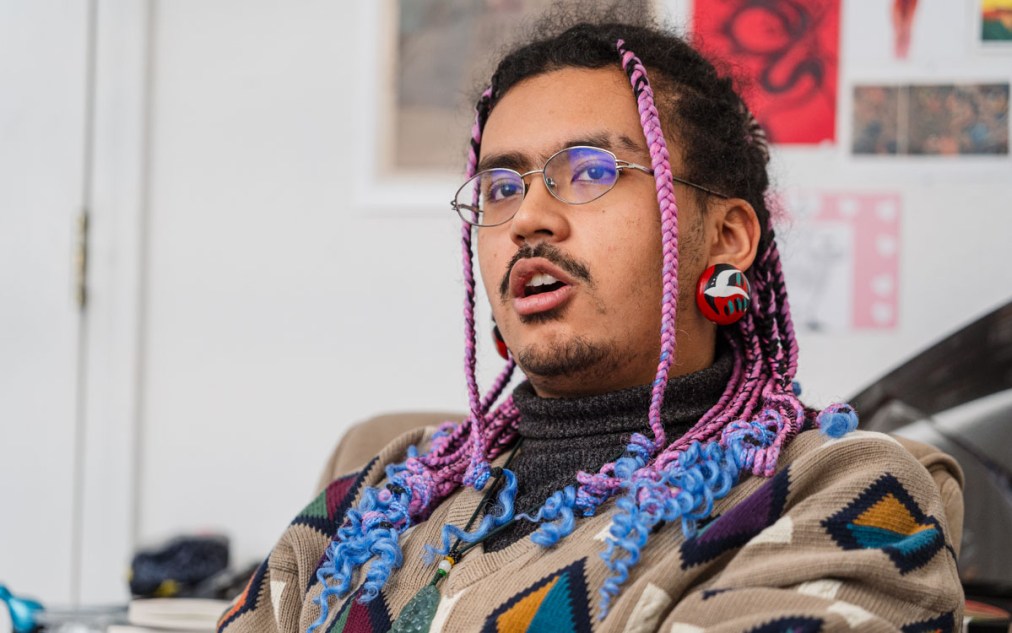
Nathan Kramer / Lawrence Times J Valencia-Cheng in their home office

Historically, Valencia-Cheng felt safest using the women’s restroom close to their on-campus office and within their department, where they’d run into female faculty.

“I finally got to experience girl talk, which is really fun and the kind of solidarity that women have when you go to the restroom,” they said.

Please support local news and information from The Lawrence Times.

Subscribe here.

Now that SB 244 has passed, they beeline for a two-stall women’s restroom in a nearby department because undergrads don’t frequent it. They said it’s ironic that their “malicious noncompliance” feels safer than going to the men’s restrooms, where they’ve encountered racial and gender-based harassment on campus and throughout the state.

When asked if there’s an accessible, gender-neutral, single-stall restroom near their office, Valencia-Cheng said that it “depends on your definition of accessible.”

The nearest option would require them to leave their part of the department building, cross an outdoor courtyard and enter a second part of the building hosting large undergrad lectures. Between the walk and long bathroom lines, this “solution” is out of the question since they have a physical disability and often use a cane.

This is the kind of tedious, fatiguing mental math that many trans people have been doing for years anytime they use the restroom in public. But now, SB 244 has added more draconian stakes for folks like Valencia-Cheng, who are weighing physical urgency against accessibility and safety every time they must exercise a simple bodily need.

‘If you can’t be in public … you can’t be a full participant in society’

SB 244 casts a wide net, affecting public buildings at KU, Haskell Indian Nations University, the Lawrence Public Library, Lawrence Public Schools, and any other government facility, such as police and fire stations, City Hall, the DMV and the county treasurer’s office.

Trans people who use bathrooms in these buildings that align with their gender identities can face civil and criminal penalties, which can lead to hefty fines or even jail time. Civilians can also act as “bounty hunters,” suing any transgender person who shares a restroom with them for up to $1,000 in damages.

Harper Seldin, a lawyer with the American Civil Liberties Union, also said legislation like SB 244 pushes trans people out of public life.

“And if you can’t be in public and be in public buildings, you can’t be a full participant in society,” he said.

Seldin is one of 12 attorneys who filed a case on behalf of two trans men in Lawrence to challenge SB 244. The men, who are going by the pseudonyms Daniel Doe and Matthew Moe, both work at KU. They are arguing that the anti-trans bill is unconstitutional and that it puts their rights, autonomy, livelihoods and safety at stake.
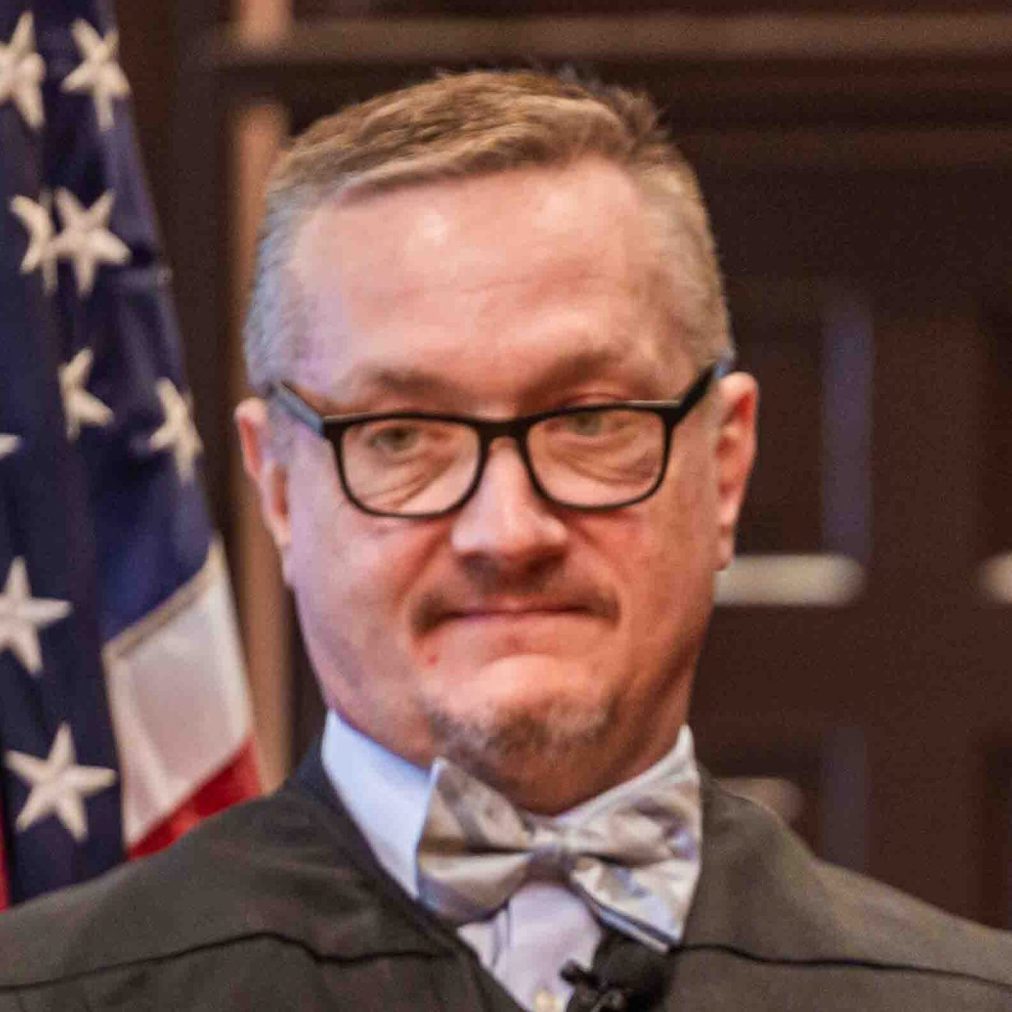
James McCabria

Douglas County District Judge James McCabria will preside over a hearing Friday, March 6, to decide if he will delay enforcement of the law as the case proceeds.

Seldin said the plaintiffs and attorneys hope trans people can keep their licenses and ID cards and that a judge will strike down criminal restrictions on restrooms.

In the meantime, trans Lawrencians are left in a tailspin.

“There’s a lot of uncertainty about how this law is going to play out on the ground,” Seldin said.

Laura McCabe, spokesperson for the Lawrence Police Department, said she wasn’t aware of any people calling with bathroom usage complaints thus far. Much of the bill is up in the air as it moves through the courts, but for now, she said commanders reviewed LPD’s policies and “see no need for updates.”

A spokesperson for the city added that “LKPD has no intention of developing proactive enforcement campaigns.”

Valencia-Cheng has started to wonder if, as a state employee, they will be held to task for enforcing the regulations. They’ve asked around with colleagues, but KU has been silent on the issue.

“I think it’s egregious in the way that there has been no legal counsel guidance from KU whatsoever about what this is impacting,” Valencia-Cheng said.
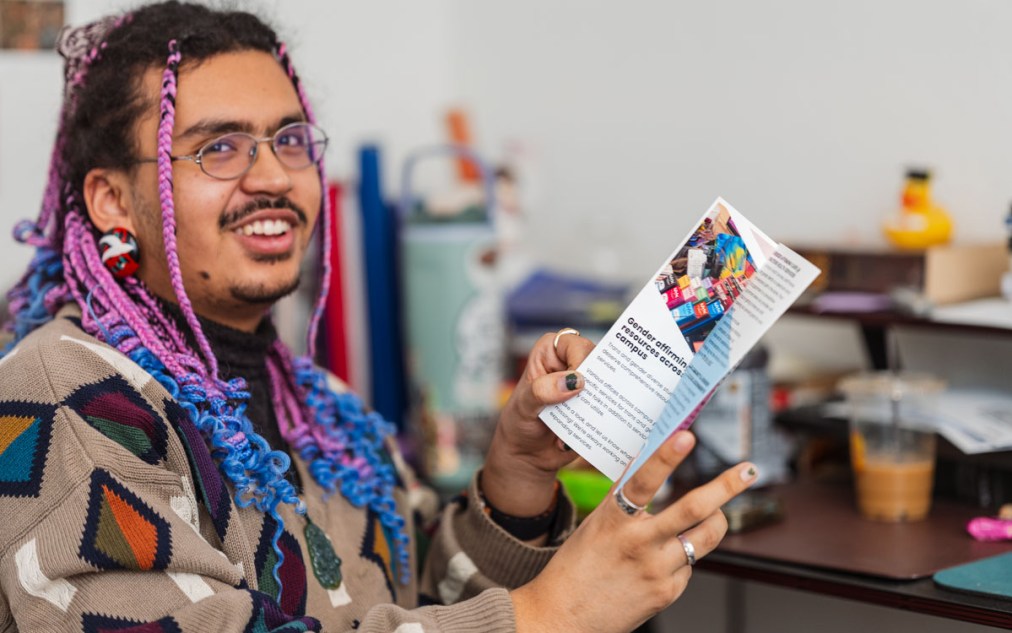
Nathan Kramer / Lawrence Times Valencia-Cheng reflects on the gender-affirming resources that KU proudly offered when they first arrived on campus.

When asked if KU has sent out any guidance to faculty, staff or students on the bill, university spokesperson Erinn Barcomb-Peterson wrote via email that KU is aware of the law and “currently reviewing the legislation to ensure full understanding of its scope and implications.”

“Existing KU policies largely align with current law, and no immediate changes are anticipated,” she continued. “As always, KU will continue to comply with all relevant legal obligations while upholding our values of safety, compliance and respect across the university system.”

Barcomb-Peterson did not respond when asked to clarify which policies were in line with SB 244.

Haskell Indian Nations University is managed by the federal Bureau of Indian Education, and staff members are generally barred from speaking to the press without prior approval from the BIE. A spokesperson for the BIE responded to multiple questions about policy and enforcement on behalf of Haskell with one sentence: “The Bureau of Indian Education and Haskell Indian Nations University operate in compliance with all applicable laws and policies.”

Brad Allen, director of the Lawrence Public Library, said LPL doesn’t currently have plans to introduce new policies and procedures.

Brad Allen

SB 244 prevents public institutions from making multi-stall restrooms gender neutral, but Allen said a plan to convert multi-occupant restrooms into single-stall, gender-neutral facilities was already underway for the lower level of the library.

He added it’s unfortunate that the design of the lobby restrooms makes them difficult to similarly convert, but there is currently a gender-neutral, single-stall restroom in the children’s area open to all on the library’s main level.

In 2023, the Lawrence City Commission unanimously passed Ordinance 9999, a safe haven law to create more protections for transgender and gender-nonconforming people. Current Mayor Brad Finkeldei was on the commission at the time.

We emailed Finkeldei on Monday to ask how he thinks the city could enforce Ordinance 9999 in the face of the anti-trans bill; whether the city will police transgender people’s use of restrooms in City Hall; and if the commission would take any action to address SB 244 beyond the safe haven ordinance.
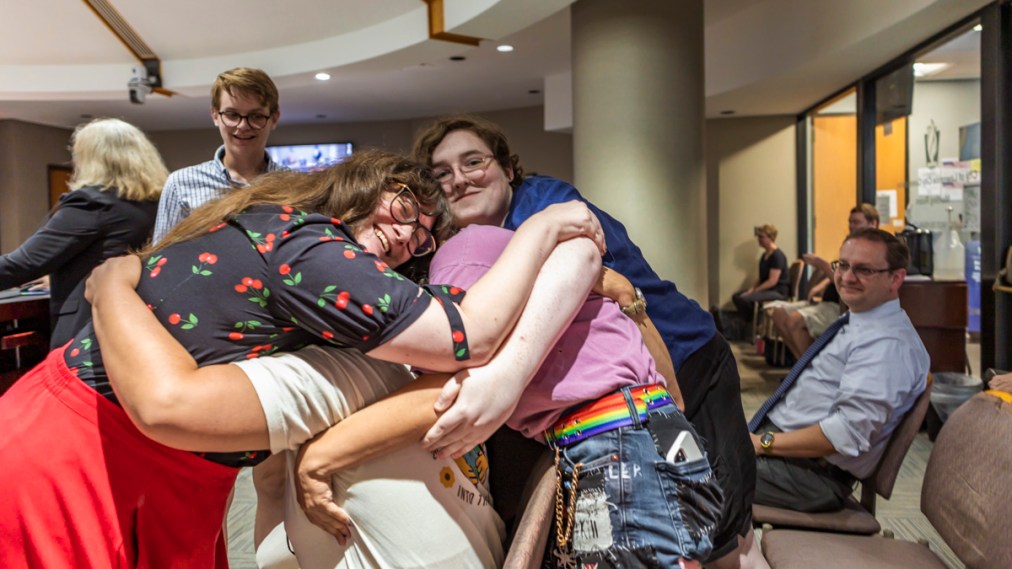
Molly Adams / Lawrence Times Members of No SB 180 — now the Trans Lawrence Coalition — hug in City Hall after Ordinance 9999 passes. (July 18, 2023 file photo)

Finkeldei did not respond and forwarded emails to Cori Wallace, a city spokesperson.

“This is an unfunded mandate, which means we have the certainty of language, but the rest, i.e. application and enforcement, is driven to the local level,” Wallace said via email.

Per the city, the bill increases administration and litigation costs for the state government and potentially every public agency in Kansas. Under SB 244, people can make complaints against public agencies for not complying. The entities can then face significant penalties, including fines of $25,000 for a first violation and $125,000 for a second violation, for not coming into compliance.

The city will need to review facilities and procedures to comply with the law. “That is the process that we are in now,” an email from the city reads.

She said the city is still exploring and doesn’t know how SB 244 will impact Ordinance 9999 or vice versa.

‘It’s about extending government control’

A nonbinary person who is a member of Trans Lawrence Coalition requested anonymity for safety concerns. They work in a public building and are a lifelong Kansan.

“It feels heartbreaking to know that a place where you’ve grown up is so vehemently opposed to your simple existence,” they said.
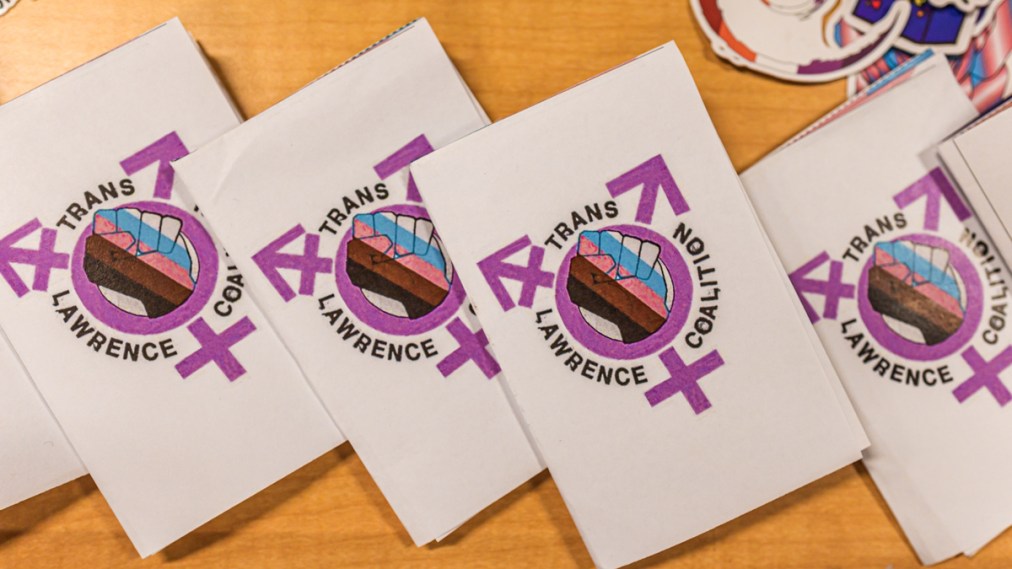
Molly Adams / Lawrence Times Trans Lawrence Coalition brochures available after a local event (July 15, 2025 file photo)

They added that fear of trans identity often hinges on a single image of “what a trans person is.” Often, there’s a stereotype of a big, cisgender man wearing a dress, going into a women’s bathroom with nefarious intent.

“That’s the boogeyman version of a very complex social issue that just does not exist in reality,” they said.

As a result, the law creates Catch-22s. Now, trans men who have undergone years of testosterone replacement therapy, who have beards and baritone voices, are required to use women’s restrooms in public buildings.

“It kind of creates an impossible situation for them, where they will be accused of committing crime no matter what they do,” the TLC member said.

Trans people will bear the brunt of the bill, but cisgender people will still face consequences that Kelly outlined in her veto.

“There’s this myth that is very popular, which is ‘you will know a trans person when you see them,’” the TLC member said. “I mean, trans people are people, and we have all different kinds of presentations, and there’s also a wide swath of the population of cis folks … who have androgynous aspects to them, or maybe they’re not perfectly ‘gender conforming’ with the social idea of the general public.”

Seldin said that now every Kansan, trans or cis, may be subject to a stranger’s assessment of their presentation in a bathroom.

“It’s about extending government control into how people order their lives,” Seldin said. “… And if the government can do that to trans people, there’s no reason the government can’t do that to everybody.”

“I think that that’s going to fall on different candidates differently, also based on factors related to race and class, right?” he continued. “I don’t think this is going to be evenly applied.”

Valencia-Cheng knows this bill will hit them all the harder as a multiracial person and child of immigrants, and retreating to the closet isn’t an option.

“I am a Chinese-Taiwanese-Latiné person who uses they/them/elle pronouns. I don’t subscribe to a strict androgyny that people want to impose on trans/nonbinary people,” Valencia-Cheng said. “… And I’m also disabled, so I also walk around physically with a marker on me. There’s no way for me to actually go covert, because going covert is impossible.”

‘A thriving community of trans and queer people’

The member of TLC said the lack of outreach or guidance in their workplace has been taxing.

“There is no support, there is no social awareness of the issues that are affecting folks,” they said. “So, in that way, it can be an extremely isolating experience where maybe you feel like … your world is kind of collapsing and you’re the only one who’s aware of it.”

Still, they have hope. They’re cherishing small interactions with loved ones and taking time to appreciate the Pride flags in business windows or waving from the stoops of Lawrence homes.

Molly Adams / Lawrence Times A person wears a trans-inclusive pride flag at Lawrence’s 2025 Pride celebration. (File photo)

As Valencia-Cheng channels their feminine rage into their creative writing, they said they’re grateful for the community of advisers at KU who have gone to bat for them. They’re also taking heart in the support that has rallied around Anthony Alvarez, a trans student who alleges that he was fired from KU in the wake of speaking out against the university’s decision to end Grace Pearson Scholarship Hall’s gender-inclusive housing.

“I see that there is a thriving community of trans and queer people in Lawrence, and I don’t think this is going to affect that and in any dramatic way,” the TLC member said.

“And if anything, it’s only going to cause folks to become more active in their circles, more connected, get to know their neighbors even better,” they continued. “And because it is now everybody’s issue, it is a conversation that’s going to take place on many more radars than it would have if legislation like this hadn’t passed in the way that it did.”

Source link

]]>
April Marshall http://transoutloud.com <![CDATA[Supreme Court blocks California ban on schools outing transgender students]]> https://transoutloud.org/?p=64794 2026-03-05T17:32:56Z 2026-03-05T17:31:06Z

A welcome sign is posted inside a classroom at Woodside High School. Photo by Michelle Le

The U.S. Supreme Court on Monday blocked California’s ban on schools outing transgender students to their parents without the student’s approval.

Granting an emergency appeal to a conservative legal group, the 6-3 vote now allows schools to disclose to parents if students change their pronouns or gender expression at school.  The court’s ruling addressed parents’ claim of rights under the free exercise clause of the First Amendment, which protects free speech and religious expression.

“The parents who assert a free exercise claim have sincere religious beliefs about sex and gender, and they feel a religious obligation to raise their children in accordance with those beliefs,” the court ruling stated.

The 2024 California law stated that the ban on automatic parental notification ensured students’ rights to privacy as well as protected transgender students “from the reasonable risk of physical, emotional, and psychological harm that forced disclosure causes.”

The Thomas More Society, a conservative group representing parents and teachers, said the ruling is “the most significant parental rights ruling in a generation.” The order, which followed the Trump administration’s investigation into the claim in January that California violated parents’ right to access students’ gender identity records, secured another win for the parental rights movement.

“The right protected by these precedents includes the right not to be shut out of participation in decisions regarding their children’s mental health,” the court stated in the ruling, referencing the 14th Amendment.

Liberal Justices Sonia Sotomayor, Elena Kagan and Ketanji Brown Jackson dissented. Kagan said the court’s decision contradicted its previous interpretations of the 14th Amendment, pointing to the overturning of Roe v. Wade, which established that the Constitution protects rights even if they are not spelled out in text.

The new ruling “cannot but induce a strong sense of whiplash,” Kagan wrote.

This story was written by Vani Sanganeria for EdSource. The original version of this article can be viewed here.

Source link

]]>
April Marshall http://transoutloud.com <![CDATA[Transgender Kansas residents fear invalid IDs, bathroom law will isolate them publicly]]> https://transoutloud.org/?p=64838 2026-03-05T17:25:56Z 2026-03-05T17:25:53Z As Siobhan Kirchstein stepped up to the counter of the Kansas Division of Vehicles last Thursday, she was struck by how banal the moment felt, even though the circumstances that brought her there felt far from ordinary.

“Why is everyone acting like this is a completely normal day?” Kirchstein recalls thinking.

Kirchstein, who is transgender, passed the clerk a letter that had landed in her mailbox the night before. It informed her – effective Thursday morning – her driver’s license would be invalidated and she would be required to surrender it to the state.

Looking behind her, she realized several others in the room were clutching the same letter.

Hundreds of transgender and nonbinary people across Kansas received notices last week they would be required to get reissued IDs that reflect their sex assigned at birth – part of a wide-ranging new law advocates say is one of the most restrictive of its kind in the US.

The law, SB 244, was passed February 18 after the state legislature’s GOP supermajority overrode a veto from Democratic Gov. Laura Kelly. The bill was rushed through the legislature using an expedited process known as “gut and go,” which allows state lawmakers to slash a bill’s contents and insert large chunks of a different bill’s text.

The two-part bill defines the term “gender” as a person’s “biological sex at birth” and requires this be reflected on state IDs and birth certificates. Approximately 1,700 driver’s licenses and an unspecified number of birth certificates are estimated to be invalidated by the law, which went into effect February 26.

Nicknamed the “bathroom bounty” bill by some advocacy groups, a second provision requires trans people to use restrooms that align with their sex assigned at birth in government buildings such as libraries, courthouses and schools. Repeat violations can result in fines or misdemeanor charges. It also allows anyone in the state to sue people they believe have violated the law for up to $1,000.

The law has been championed by state conservative lawmakers, including Kansas Senate President Ty Masterson, who said last month, “common sense has prevailed.”

Rep. Bob Lewis, a Republican, said during a House session last month he believes the law “codifies societal norms” and ensures “public spaces used for private purposes will be single-sex and that a person’s identification documents will accurately reflect their biological sex.”

But transgender Kansans said they felt blindsided by the law’s swift enforcement and sweeping provisions, which some fear will make it increasingly difficult to perform essential tasks within the state such as applying for jobs, voting and using a public restroom.

While other states prohibit trans people from reflecting their gender identities on licenses or changing their birth certificates, Kansas’ law is the first to require trans people to reverse this change on existing documents, The Associated Press reported.

In a lawsuit filed Friday challenging the law, the ACLU said SB 244 was “meant to discriminate against and dehumanize transgender people.” The suit asks the court to temporarily block enforcement of the law while the case plays out.

“The intended effect was to unequivocally let the trans community know that they are not safe or welcome in Kansas,” said Rep. Abi Boatman, the state’s only transgender lawmaker. “It is a literal one-stop-shop bill of hate.”

Though transgender Kansans had heard of SB 244’s passage, some say they were caught by surprise by how quickly the ID requirements of the law were enforced. Others say they are still waiting for a notification their state IDs are invalid.

As of February 26, the Department of Revenue said it had issued only 300 license invalidation notices so far, though the agency has estimated about 1,700 people will be affected. Those who received their letters late Wednesday or Thursday could not legally drive to the department office to change their license.

“I had to have a friend drive me because it warned us of penalties,” Kirchstein said.

Siobhan Kirchstein stands at a Kansas DMV counter where she surrendered her driver's license on Thursday, February 26.

Typically, new laws in Kansas go into effect on July 1, when the annual statute book is published. But SB 244 was written so it would take effect as soon as it was published in the Kansas Register, which updates every Thursday.

Isaac Johnson, a trans activist with the local Trans Lawrence Coalition, said members of the advocacy group have said they were unable to legally drive to work once the law suddenly went into effect.

“You didn’t even give me a chance to comply with your law to begin with, and now you’re threatening me with legal action if you catch me driving to the DMV to update my driver’s license?” Johnson said in frustration. “That’s what’s been really shocking.”

Conservative Kansas lawmakers praised the law as a common sense measure, celebrating the bathroom provision in particular as a way to “protect women and girls” from sharing restrooms, changing rooms and other facilities with transgender women.

“SB 244 restores sanity in Kansas,” Masterson, the Senate president, said in a statement. “We swiftly overrode Laura Kelly’s radical veto that would have forced our mothers, sisters, wives, and daughters to share their bathrooms with biological men in government buildings,” he said, referring to transgender women.

For trans Kansans, both the bathroom and ID restrictions have fueled concerns they may be harassed or retaliated against because of their identity – even if they do follow the law.

Using multiple-occupancy restrooms that align with their identity is now illegal for trans people. For those who have physically transitioned – and whose appearance now aligns with their gender identity – using public restrooms may cause even more discomfort and confusion.

“People will also still think you’re using the wrong restroom, right? Because for many (transgender) folks, we don’t look like our sex assigned at birth,” said Harper Seldin, staff attorney for the ACLU’s LGBTQ and HIV Rights Project.

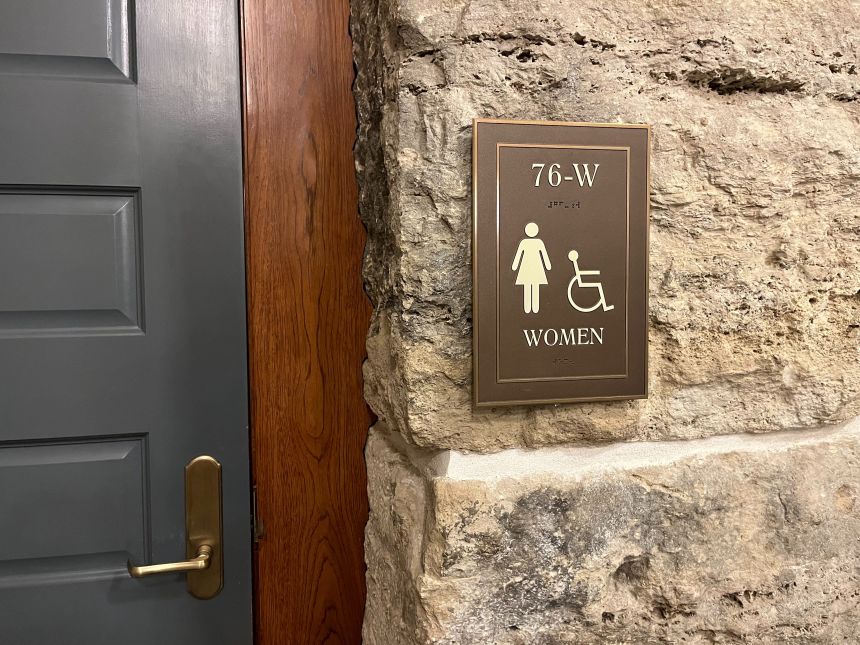
SB 244 also bans parents from taking children ages 9 and older into opposite-sex restrooms in government buildings, like this one at the Kansas Statehouse in Topeka.

The so-called “bounty” provision of the law, which allows people to sue if they feel “aggrieved” by a trans person’s presence in restrooms or other sex-segregated spaces, has also fed anxieties of those who fear they will be targeted for their appearance.

“It creates this incentive for Kansans to police their neighbors,” said Seldin.

Boatman believes the situation could lead to harassment of people who comply with the law, including cisgender women who may be questioned due to their appearance.

“I think we’re gonna really run into some unintended consequences where people are harassing and accosting folks in the bathroom for actually following the law,” Boatman said.

The legislation restricts any “multiple-occupancy private space,” which could be interpreted to include nursing homes, dormitories and locker rooms, Boatman said.

Some transgender people in the state will experience a similar incongruence between their physical appearance and the gender marker on their state ID. Several people who spoke to CNN expressed concern they may be forced to disclose their identity when performing essential tasks, like going through airport security or applying for jobs, apartments or bank loans.

After Johnson transitioned, he said he had no desire to change the gender marker on his documents. But he soon found himself in uncomfortable situations where people didn’t understand why his appearance did not align with his ID. On one occasion, he said, he was accused of identity fraud.

“The reason why I changed my gender marker was because (cisgender) people are already weird when your marker doesn’t match the way they understand you,” he said. “I’m understood as a male. So that’s why I changed it to male, so it wouldn’t be confusing for people.”

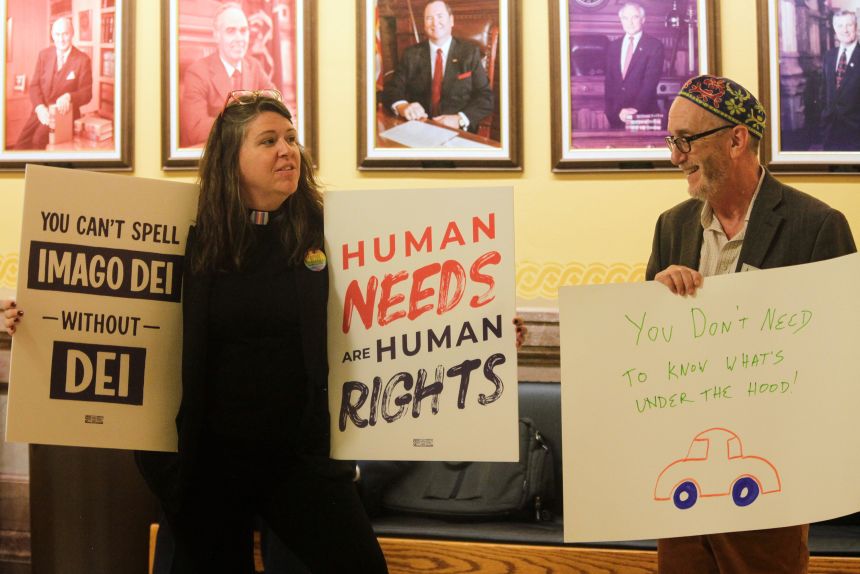
Rev. Dr. Mandy Todd, of Messiah Lutheran Church, and Rabbi Moti Rieber, right, executive director of Kansas Interfaith Action, protest SB 244 on February 16 outside the state senate chamber.

The mounting number of restrictions placed on transgender people in Kansas has caused some people to question whether they should remain in the state at all.

Ruby Mae Johnson, who has lived in Kansas for most of her life, has begun planning a move to the Netherlands because she no longer feels safe in the country.

It’s an ongoing process of mourning,” she said. “There are places in the United States that are extraordinarily dear to me that I have to reckon with the idea that I may never see them again. I have a child buried in the United States. I have three living children and three grandchildren.”

Even as Johnson and her partner plan their move, she said she worried for the people they will leave behind.

Kirchstein said she has often discussed moving with her friends. She has Canadian ancestors and is working to apply for a Canadian passport.

“Despite the fact that we love this place, we do not feel safe in Kansas anymore,” she said. “As a matter of fact, I have friends who have left the country altogether.”

Even if Kirchstein did leave, she hasn’t decided how far she would be willing to go from home.

“I would not want to leave the United States, but if, I mean, today was a terrifying example of what is in store in this country,” she said.

Others, like Gabriel Padilla, would rather stay and challenge the restrictions rather than leave their lifelong home.

“I’m one of those people that would rather fight it and figure out what I can do,” Padilla said. He added, “I know that I’ve lived here all my life for a reason. I’ve never wanted to leave Kansas.”

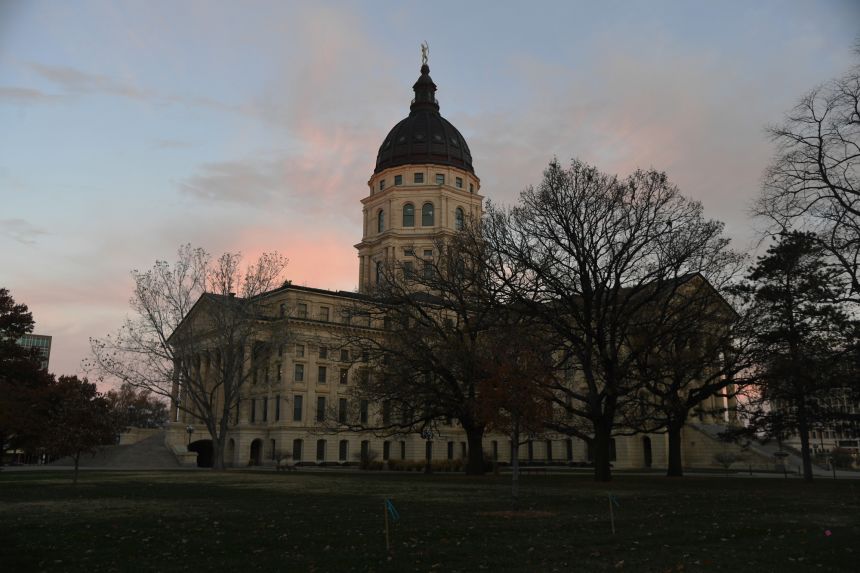
File photo of the Kansas capitol building in Topeka, Kansas.

In recent years, hundreds of laws across the US have restricted how transgender people receive health care and show up on playing fields and in the classroom. Fierce battles over the constitutionality of these laws have played out in America’s courtrooms, with some – such as sports participation bans and youth health care regulations – have made it all the way to the Supreme Court.

SB 244 will undoubtedly get its own day in court.

The lawsuit filed by the ACLU and law firm Ballard Spahr last Friday was brought on behalf of two transgender men. It argues the law violates Kansas’s constitutional protections for personal autonomy, privacy, equality under the law, due process and freedom of speech.

Heather St. Clair, a Ballard Spahr attorney, slammed the law as a “state-sanctioned attack on transgender people aimed at silencing, dehumanizing, and alienating Kansans whose gender identity does not conform to the state legislature’s preferences.”

The attorneys have requested a temporary restraining order from the court, which would halt the law’s enforcement while the legal challenge plays out.

Harper, the ACLU attorney, said the legal team has asked for the issue to be heard by the court as soon as possible.

Source link

]]>
April Marshall http://transoutloud.com <![CDATA[Trans Girl Scouts Sell 330,000 Boxes Of Cookies In Public Outpouring Of Support]]> https://transoutloud.org/?p=64825 2026-03-05T16:36:09Z 2026-03-05T16:36:06Z

Five years ago, as anti-trans legislation first began spreading across the United States, I kept thinking about the kids caught in the middle of it—transgender children suddenly facing a wave of hostility simply for existing. That year, I started something small in response: a trans Girl Scout cookie list. Only three scouts were on it. The internet responded immediately, helping them sell out their entire quota. Every year since, I’ve made the list again, and every year it has grown larger. Now, in 2026, the list has reached a staggering scale: 220 transgender Girl Scouts participating—and together they have already sold more than 330,000 boxes of cookies, with the number still climbing every minute.

One scout hoping to fund a troop trip to Alaska—and assemble backpacks for foster children—has sold 2,500 boxes of cookies, bringing those plane tickets within reach. Another scout, a competitive soccer player, was raising money so her troop could attend scouting camp without worrying about the cost; she has now sold 4,500 boxes, ensuring that trip is covered. One troop made up of transgender Girl Scouts set their sights on learning horseback riding and attending summer camp together—and sold 22,000 boxes to make it happen. And Pim, who simply wanted to go to Niagara Falls and to take her troop camping, has sold more cookies than the website can even track: more than 100,000 boxes.

And while we can’t know exactly how many of those sales came directly from our yearly list, we do know that these trans Girl Scouts have taken the internet by storm. Posts about them have racked up millions of impressions on Facebook and gone repeatedly viral on Bluesky. In the process, countless people looking for their next box of cookies discovered a cause worth supporting—and a group of scouts they were excited to cheer on.

The news about their staggering success comes during a broader regression around scouting organizations with respect to transgender people. In December, the United Kingdom’s Girlguiding—the British equivalent of the Girl Scouts—banned transgender girls from joining, reversing a policy that had been in place since 2018. In the United States, Defense Secretary Pete Hegseth forced Scouting America to agree to classify members by sex assigned at birth, eliminate diversity initiatives, and effectively out and segregate transgender scouts from their peers. Girl Scouts of the USA, however, has yet to see the same regression—the organization still stands by its transgender inclusion policy.

For these kids, that transgender inclusion policy has given them hope. At a time when thousands of anti-LGBTQ+ bills are being proposed and passed across the country, the cookie list is proof that people out there care. When every force in the world is acting against them, for once, their identity is not treated as a curse by society, but a blessing. Parents have told me that their children have been overwhelmed with joy watching the numbers climb, realizing that strangers across the country support them. And that’s worth protecting.

You can purchase Girl Scout cookies from a trans Girl Scout here.

Source link

]]>
April Marshall http://transoutloud.com <![CDATA[Beyond the Binary: Celebrating Nonbinary and Genderfluid Identities]]> https://transoutloud.org/?p=60533 2025-07-01T14:51:10Z 2025-07-01T14:50:14Z

1. Introduction: The Limits of the Binary

Western society has long operated under the assumption that there are only two genders: male and female. This binary system has been encoded into laws, institutions, medical frameworks, and everyday language. It dictates how people are expected to dress, behave, love, and move through the world. It leaves little room for complexity, for contradiction, or for the lived realities of those who do not see themselves within either of these narrow categories.

But the gender binary is not a universal truth. It is a cultural construct—one that erases the experiences of millions. Nonbinary and genderfluid people exist outside or beyond this binary, and their identities expand our collective understanding of gender, embodiment, and humanity itself.

This article seeks to explore who nonbinary and genderfluid people are, the challenges they face, the joy and strength they bring to the world, and how allies can show up in meaningful ways.


2. What Does Nonbinary Mean? (And What It Doesn’t)

“Nonbinary” is an umbrella term for gender identities that fall outside the categories of exclusively male or female. It can include identities like agender (having no gender), bigender (having two genders), genderqueer (a rejection of normative gender categories), and many others.

Nonbinary people may identify as partially male and female, neither, a mix, or something entirely different. The key point is that their gender identity does not fit neatly into the binary.

Importantly, nonbinary is not synonymous with “confused,” “trendy,” or “attention-seeking.” These harmful stereotypes stem from societal discomfort with gender variance, not from the realities of those living it.

There is no single way to “look” nonbinary. Some present in androgynous ways. Others embrace more traditionally masculine or feminine aesthetics. Clothing is not identity. Gender is not performance.


3. Genderfluidity: Motion, Change, and Embodiment

While nonbinary is often a static identity, genderfluidity is dynamic. Genderfluid people experience their gender as shifting over time. These shifts may occur daily, monthly, or irregularly. Some may move between two gendered experiences; others may move through many.

Genderfluid individuals often face an extra layer of misunderstanding. Society is generally more comfortable with static categories. The idea of changing one’s identity—even if it’s authentic and deeply felt—is seen as suspicious, unstable, or performative.

But for those who are genderfluid, this motion is not a problem to be solved. It is their truth. Their bodies and souls speak many languages, and they are fluent in all of them.


4. The Cultural History of Gender Diversity

Nonbinary and genderfluid people are not a modern invention. Cultures around the world have long recognized more than two genders.

  • Two-Spirit people in many Indigenous North American cultures hold sacred roles and embody a spectrum of gendered and spiritual identities.
  • Hijras in South Asia have existed for thousands of years and are recognized in Indian law as a third gender.
  • Fa’afafine in Samoa and Kathoey in Thailand are other examples of culturally specific gender diversity.

Colonialism and Christian missionary efforts worked aggressively to erase these identities, replacing local understandings of gender with Western binaries. The myth that trans and nonbinary people are a recent phenomenon is rooted in that erasure.


5. Navigating a Binary World

For nonbinary and genderfluid people, daily life often involves navigating a world that is not built for them.

  • Healthcare: Medical systems still heavily rely on binary gender markers. Many nonbinary people struggle to access competent, respectful care, especially when it comes to hormone therapy, reproductive health, and mental health services.
  • Legal Systems: Most forms, IDs, and bureaucratic systems require individuals to declare “male” or “female.” Though some states and countries offer a third “X” gender marker, these options are not universally accepted.
  • Workplaces: Professional dress codes, gendered language, and HR systems rarely reflect or accommodate nonbinary experiences.
  • Public Spaces: Bathrooms remain a flashpoint. Being forced to choose between two binary options can be dysphoric and unsafe.

In addition to these institutional barriers, nonbinary and genderfluid people endure constant social invalidation: comments like “You don’t look nonbinary,” “That’s not a real thing,” or “Make up your mind.”

The cumulative impact of these microaggressions and structural obstacles takes a toll. Higher rates of anxiety, depression, and suicidality among nonbinary individuals reflect a lack of societal support, not any inherent flaw.


6. Language, Pronouns, and the Struggle for Respect

Pronouns are a basic form of respect. Using someone’s correct pronouns is not about politics or personal belief—it is about acknowledging their humanity.

Nonbinary people may use they/them pronouns, she/they, he/they, neopronouns like xe/xem, or no pronouns at all. There is no universal formula. When in doubt, ask. Then respect the answer.

Misgendering is not just a slip-up. It can be a painful reminder of erasure. While mistakes happen, the key is to apologize briefly, correct yourself, and move on. Making a scene about how hard it is centers the discomfort of the speaker, not the person misgendered.

Language evolves. The existence of neopronouns or nontraditional grammar is not a burden. It is a reflection of human complexity. If English can accommodate “they” for a group of people, it can accommodate “they” for one person.


7. Visibility, Safety, and the Decision to Come Out

Visibility is often treated as the goal. But for many nonbinary and genderfluid people, visibility is dangerous.

Coming out can mean losing housing, jobs, or family. It can mean harassment or violence. The pressure to be publicly “out” ignores these realities.

Some people cannot come out, or choose not to. That decision is valid. Safety and survival are priorities. There is no moral obligation to be a representative, especially when the cost is so high.

For those who are out, visibility can be a radical act. It can also be exhausting. Representation in media, politics, and culture matters—but it must be supported by policy, protection, and real community care.


8. Joy, Creativity, and Resistance

Despite everything, nonbinary and genderfluid people create. They celebrate. They thrive.

They build community online and offline. They make music, art, and fashion that defy categories. They rewrite language and reimagine family. They resist quietly and loudly. They live in ways that unsettle oppressive systems—not for the sake of rebellion, but because that is where their truth leads them.

Their existence is not a debate. It is a form of resistance. It is also a source of immense beauty.


9. Allyship: What Real Support Looks Like

Allyship is not a performance. It is a practice.

  • Listen more than you speak. Educate yourself. Don’t expect nonbinary people to do the emotional labor for you.
  • Normalize pronoun sharing in meetings, email signatures, and conversations.
  • Challenge gendered assumptions. Don’t correct people for not being “masculine enough” or “feminine enough.”
  • Push for policy change in your workplace, school, or local government.
  • Interrupt transphobia when you hear it—even when no trans people are present.

Being an ally is not about being perfect. It’s about being accountable, consistent, and willing to grow.


10. Resources and Further Reading

🧠 Mental Health & Support


📚 Education & Community


🛠 Legal & Practical Resources


11. Final Words

Nonbinary and genderfluid people are not anomalies. They are not trends. They are not threats to society. They are part of the vibrant spectrum of humanity.

Their existence does not diminish anyone else’s. It expands what’s possible. In honoring their identities, society moves closer to justice, to empathy, and to truth.

There is no single way to be a person. And there never was.

]]>
April Marshall http://transoutloud.com <![CDATA[Supreme Court Throws Out Several Trans Rulings]]> https://transoutloud.org/?p=60506 2025-07-01T14:07:33Z 2025-07-01T14:07:06Z The Supreme Court threw out appellate rulings in favor of transgender people in four states, ordering judges to reexamine the cases in the wake of the justices’ decision to uphold a Tennessee ban on certain medical treatment for trans youths.

The four cases come from Idaho, North Carolina, Oklahoma, and West Virginia.

The action was unsurprising because the court had set the cases aside until after it decided the Tennessee case, as typically happens when the same legal issue is being considered.

The rulings all included findings that the restrictions on transgender people imposed by the states violate the U.S. Constitution’s Equal Protection Clause.

The earlier 6-3 Tennessee ruling on June 18 came along ideological lines in U.S. v. Skrmetti, and effectively protects from legal challenges many efforts by the Trump administration and state governments to roll back protections for transgender people.

The challenge was brought by three transgender adolescents, their families, and a Memphis-based medical provider against a Tennessee law banning gender-affirming hormone therapies for transgender people under 18.

trans rights protesters
Transgender rights supporters rally outside the U.S. Supreme Court in Washington, D.C., on December 4, 2024.

Kevin Dietsch/Getty Images

Four Appeal Cases in Favor of Trans People

On Monday, the justices ordered the 4th U.S. Circuit Court of Appeals in Richmond, Virginia, to review its decision that West Virginia’s and North Carolina’s refusal to cover certain health care for transgender people with government-sponsored insurance is discriminatory.

The San Francisco-based 9th U.S. Circuit Court of Appeals will get back a case from Idaho stemming from the state’s ban on certain surgical procedures for Medicaid recipients.

The 10th U.S. Circuit Court of Appeals in Denver will review its ruling blocking an Oklahoma ban on people changing their gender on birth certificates.

In another case, from Kentucky, the justices rejected the appeal of transgender minors and their families challenging that state’s ban on gender-affirming care.

Tennessee Trans Case

Senate Bill 1, Tennessee legislation that bans gender-affirming care for transgender youth regardless of parental consent and medical recommendation, was signed into law in March 2023.

In April 2023, the American Civil Liberties Union, the ACLU of Tennessee, Lambda Legal and Akin Gump Strauss Hauer & Feld LLP sued the state on behalf of families and transgender youth to block the ban.

A district court judge later determined that the plaintiffs were likely to succeed on their constitutional claims and issued a preliminary injunction, which blocked the law from taking effect.

The district court decision was later appealed to the Sixth Circuit, which reversed the lower court’s decision.

The plaintiffs filed petitions with the U.S. Supreme Court, asking it to review the reversal. In June 2024, the Supreme Court agreed to take up the petition. Oral arguments were heard on December 4, 2024.

‘Law That Plainly Discriminates’

Writing for the court in its June 18, 2025, ruling, Chief Justice John Roberts said that Tennessee’s law falls within the bounds of legislative authority and does not discriminate against transgender individuals under federal constitutional standards.

His opinion says in part that this “case carries with it the weight of fierce scientific and policy debates about the safety, efficacy, and propriety of medical treatments in an evolving field. The voices in these debates raise sincere concerns; the implications for all are profound.”

Roberts added that the court’s role is “only to ensure” that the law “does not violate” the Equal Protection Clause, which he said “it does not.”

“Having concluded that it does not, we leave questions regarding its policy to the people, their elected representatives, and the democratic process,” he added.

Justice Sonia Sotomayor, writing in a dissent joined by the court’s other liberal justices, condemned the ruling, saying the majority “abandons transgender children and their families to political whims.”

“Thus, the majority subjects a law that plainly discriminates on the basis of sex to mere rational-basis review,” Sotomayor wrote.

“By retreating from meaningful judicial review exactly where it matters most, the Court abandons transgender children and their families to political whims. In sadness, I dissent.”

This article includes reporting by The Associated Press.

Update 6/30/25, 10:56 a.m. ET: This article was updated with additional information.

Source link

]]>
April Marshall http://transoutloud.com <![CDATA[Trans troops in US military ‘in survival mode’ as ban on serving kicks in]]> https://transoutloud.org/?p=60508 2025-07-01T14:06:18Z 2025-07-01T14:04:11Z Megha Mohan & Yousef Eldin & Sophie Eastaugh

BBC World Service

BBC Kara's long straight blonde hair falls over her right shoulder. She is wearing a light blue vest top and has a tattoo of a phoenix rising, engulfed in flames, on her left arm.BBC
Kara joined the Army in 2008 and transitioned 10 years later

After 17 years in the US Army, Maj Kara Corcoran, 39, was preparing to graduate from an elite military leadership programme.

But there was a complication.

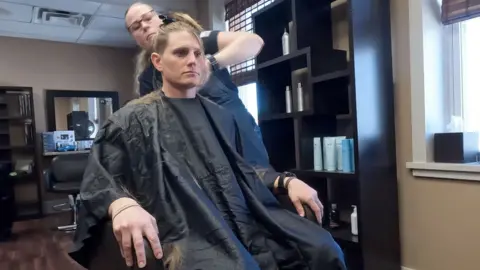
Two days before the ceremony, Kara was told that she would need to conform to male regulations, which meant wearing male uniform and cutting the long blonde hair she had grown since she told the Army she identified as a woman in 2018.

The directive had come from the Pentagon, and filtered down through her chain of command at Fort Leavenworth, Kansas.

“Nothing about me is a man, but we’re going to force me into male regs just so I can walk across the stage with my peers,” she said in the hours leading up to the ceremony. “It’s not my choice to cut my hair. I’m doing it because I have to.”

Kara is one of several thousand transgender people affected by a ban, announced by President Trump in January, that prevents them from serving in any job in the US military.

A previous ban in his first term focused on new recruits and allowed some exceptions, particularly for those already serving. The 2025 policy removes virtually all of the exceptions.

Official figures say there are about 4,200 transgender service members in the US armed forces, however other estimates are much higher, at about 10,000.

Kara Corcoran Kara sits in a chair in a hairdressing salon, wearing a black cape over her clothes, while a hairdresser cuts her hair.Kara Corcoran
Kara had her hair cut on 21 May, the day before her graduation ceremony

The new policy states that a history or diagnosis of gender dysphoria – where a person feels their gender differs from their sex registered at birth – is “incompatible with the high mental and physical standards necessary for military service”.

An executive order outlined President Trump’s position that “the Armed Forces have been afflicted with radical gender ideology” and that the policy would ensure staff were “free of medical conditions or physical defects that may reasonably be expected to require excessive time lost from duty for necessary treatment or hospitalization”.

The order also stated that “a man’s assertion that he is a woman, and his requirement that others honor this falsehood, is not consistent with the humility and selflessness required of a service member”.

A Gallup poll in February this year suggested that 58% of Americans “favor allowing openly transgender men and women to serve in the US military, but support has declined from 71% in 2019 and 66% in 2021”.

Critics have called the ban discriminatory and legal challenges have been filed from serving transgender officers and human rights groups.

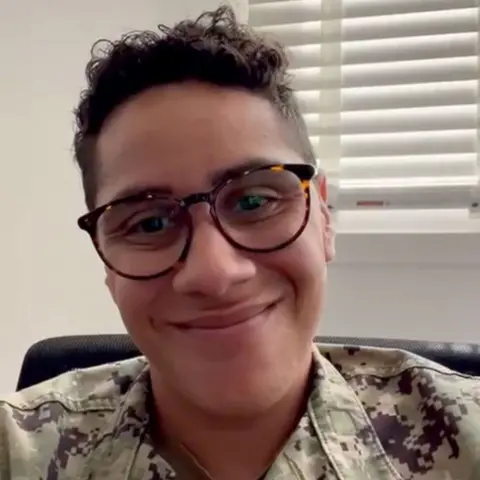
Since February, the BBC has followed the lives of Maj Kara Corcoran and an officer in the Navy, Lt Rae Timberlake, as they navigate the uncertainty of their military careers. They have shared their thoughts and feelings in a personal capacity, not as spokespeople for the US military or other colleagues.

A career in question

Close-up of Kara's face as she aims a rifle. She is wearing a back-to-front cap and ear defenders.
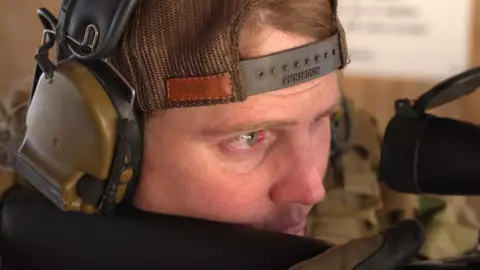
Kara during rifle practice near her base at Leavenworth, Kansas

Kara has spent most of her adult life in the US Army. Her combat deployments included time in Afghanistan where she was both a platoon leader and a company commander, when she was living as a man, before she transitioned. Since then, she says she has legally changed her name and gender and uses female pronouns.

Transgender people were disqualified from all jobs in the military until 2016, but over the past decade, as governments have changed, US policy has flip-flopped.

  • 2016: Obama lifts ban on trans people serving, allowing them access to funding through the military for gender-related treatment
  • 2017: Trump announces ban on trans people serving, citing medical costs and potential disruptions
  • 2021: Biden signs order restoring the right of trans people to serve
  • 2025: Trump announces new ban and bases are told to initiate separation proceedings against personnel with gender dysphoria

“For a long time, I stayed silent,” says Kara. When she joined up in 2008, women were not allowed in combat positions either.

Kara married a woman and had children, although the relationship broke down and ended as she grappled with her identity.

Kara came out as a transgender woman in 2018 and began her hormonal and surgical transition. She says she had the support of her commanding officers, who were still working to the previous set of guidelines, despite Trump’s 2017 ban. She tells the BBC that the transition improved her ability to serve.

“It’s made me more focused, more resilient,” she says. “There’s a common misconception that transitioning is a liability. For me, it’s been the opposite.”

REUTERS/Carlos Barria Donald Trump standing up, saluting with his right hand to his forehead. He is wearing a dark blue suit, white shirt, red tie and has a small lapel badge of the US flag.  REUTERS/Carlos Barria
President Trump salutes during the US Army’s 250th birthday parade, Washington DC, 14 June

Now, with Trump’s latest policy in effect, Kara has been told that unless she leaves voluntarily, she may be forced out of the service against her will through a process called involuntary separation.

Involuntary separation happens when someone is discharged and they do not choose to leave of their own accord. It can affect any service member, not just people in combat roles.

As well as losing their jobs, people can also potentially lose benefits, such as pensions, healthcare and disability provisions.

The Department of Defense said that if someone went involuntarily they may get half what they would get if they left voluntarily – the difference could be tens of thousands of dollars.

Despite this, Maj Kara Corcoran says she does not want to walk away.

“I’m not going to get voluntarily separated,” she says. “I’ll go through the involuntary separation and what that looks like and how horrific they want to make that for me and other service members.”

‘The single dumbest phrase in military history’

Carl Higbie sitting down, wearing a mid-blue suit and light blue shirt. He has short dark hair. He has a lapel badge which appears to be the Navy Seal insignia.
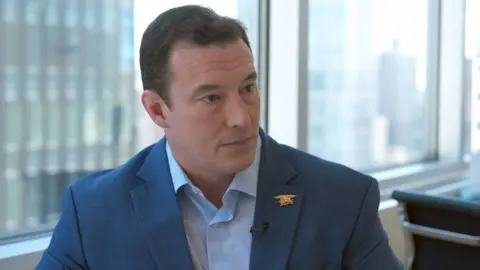
Former US Navy Seal, Carl Higbie, believes trans people are not fit to serve in the armed services

Others such as former US Navy Seal, Carl Higbie, support Trump’s ban, though. Carl now hosts a TV show on the conservative network Newsmax.

He believes that transgender people are not fit for service in the US military, arguing that gender dysphoria may require ongoing medical care and accommodations that could affect deployability.

“You can’t take Ritalin [which is used to treat ADHD] or certain types of prescription medications and be an eligible service member in combat. Why should you be on hormone therapy, which we know has sometimes emotional effects?” he asks.

When asked if he thought that biological women, who may be on other medications containing hormones, such as treatment for the menopause, are fit to serve in the armed forces, he said: “I think there are certain times where we should be more concerned about killing bad guys than making sure that we have gender quotas on a combat operation.”

The ban on transgender service members is part of a broader shift in US military policy – Defence Secretary Pete Hegseth, a Trump appointee and former army officer, has moved to eliminate diversity, equity, and inclusion programmes.

“I think the single dumbest phrase in military history is ‘our diversity is our strength’,” Hegseth said at a Pentagon event in February.

And in April, he posted on X that he “proudly ended” the Women, Peace and Security programme, an initiative to invite more women and girls to be part of conflict resolution. He called it a distraction from the core task of “war-fighting”.

EPA-EFE/REX/Shutterstock Side shot of Pete Hegseth's head next to to a sign that says Department of Defense. He is wearing a light grey suit, light shirt and a dark blue tie with light blue stripes.EPA-EFE/REX/Shutterstock
US Defence Secretary Pete Hegseth said the ban was “the president’s agenda… and we’re going to continue to relentlessly pursue it”

A family on the brink of change

Many had seen the policy shift coming. In the early hours of 6 November, when Donald Trump secured his victory in the 2024 US presidential election, Lt Rae Timberlake made a decision.

A non-binary navy officer, Rae joined the Navy aged 17 and has served aboard the nuclear-powered aircraft carrier USS Nimitz and in the Middle East.

Rae falls under the trans umbrella because, although they were registered female at birth, they identify as neither male nor female and use they/them pronouns.

Rae says that coming out as non-binary in 2020 and transitioning brought clarity to their identity. “The moment I heard the word ‘non-binary’, I knew it fit,” they told the BBC.

But with the 2024 Trump victory, Rae felt the clock was ticking on their career. They requested to transfer from their West Coast base, to a base closer to family in the east, who could give them support.

Rae Timberlake Rae sits in a chair wearing camouflage clothing and glasses. They have short dark hair and are smiling at the camera.Rae Timberlake
Rae Timberlake has spent half their life – 17 years – in the US Navy

Rae, their wife and daughter moved in the middle of a school term, in the anticipation that a possible separation from the Navy was imminent.

“It felt like the safest move for us, in case I was forced to leave the service,” says Rae.

They add that they weren’t surprised by President Donald Trump’s executive order in January, or a memorandum from the Department of Defense the following month.

The memo specified that military bases must identify service members diagnosed with or exhibiting symptoms of gender dysphoria. The final deadlines to come forward voluntarily were eventually set as 6 June for active-duty personnel and 7 July for reserve and National Guard members.

In May, the Department of Defense said 1,000 service personnel had self-identified as trans, but there has been no update of the number since then.

The military has 30 days from a deadline to start involuntary separation proceedings.

The memo includes a provision for people to be considered for a waiver on a case-by-case basis. There are a few conditions including that staff must have “never attempted to transition to any sex other than their sex”.

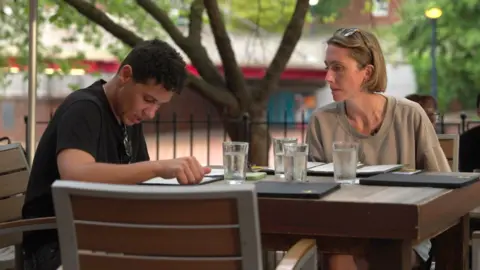
Rae and Lindsay sit at an outdoor restaurant table looking at menus. Rae has short dark hair and is wearing a black T-shirt. Lindsay has light brown hair in a bob and is wearing a beige T-shirt.
Rae and their wife Lindsay are now settling in to their new home on the East Coast

By the time the memorandum was published, Rae had taken a new post in Maryland, and the family was adjusting to their new home.

“Watching Rae lose their career, it’s painful,” their wife, Lindsay, says. “We’re in survival mode. We haven’t had time to connect as a family. We just keep making hard choices.”

For Rae, the emotional cost has been high. They have decided they want more control over the future, so have requested to retire from the Navy, and believe that in doing so have self-identified for voluntary separation. The application hasn’t been accepted yet, but Rae believes it will be.

They expect the financial implications to be substantial. Without completing 20 years of service, Rae says they will likely forfeit eligibility for a military pension. They estimate pension payments could have added up to about $2.5m (£1.8m) over the course of their retirement.

A legal and political battle

While the Department of Defense says the ban will maintain consistent medical and readiness standards across the forces, opponents, argue that the policy targets a vulnerable group unfairly.

Three lawsuits have been filed challenging its legality.

In one high-profile ruling, a federal judge blocked the ban temporarily, citing concerns over its constitutionality and suggesting it discriminated based on gender identity. However, in April, the Supreme Court lifted the injunction, allowing the policy to move forward while litigation continues.

The legal back-and-forth has left transgender service members in limbo.

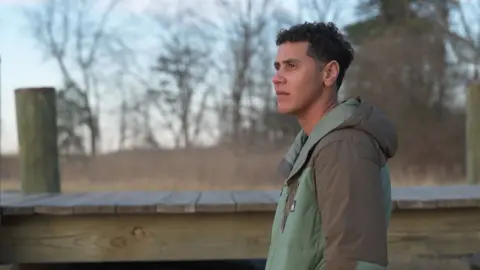
Rae looks pensive with a jetty and trees in the background. They are wearing a green and beige hooded jacket.
Rae says they want to be accepted for who they are

Rae has found job hunting in the civilian sector tough. “I applied for a position that had over 800 applicants in one day,” they say, adding that civilian life will offer less security than the Navy. “It’s competitive and daunting out there.”

But they say the next chapter is about not feeling “under threat for who I am”.

Looking ahead

Kara didn’t self-identify by the 6 June deadline, so is waiting to see if the military flags her for separation – the 30-day window means that should happen by 6 July. She will see what unfolds from there.

The US Department of Defense declined to give a statement to the BBC but pointed to previous statements saying it was committed to treating all service members impacted by the policy with dignity and respect. A US defence official said that “characterization of service will be honorable except where the Service member’s record otherwise warrants a lower characterization”.

For now Kara remains at her base in Fort Leavenworth but is prepared to leave with little notice if she has to. She has turned her car into a mobile home with a chunky power bank, cooking equipment, and a fold-out mattress. “On top I’ve got an eight-gallon water tank. I fill it up, pump it with an air compressor, and I can take a shower out in the wild. At least I have somewhere to live.”

When she graduated from the leadership programme with distinction, after complying with male uniform and grooming standards, she said it “meant a lot, but how I had to do it felt like erasing my identity”.

“This is about people who’ve dedicated their lives to service, now being told they’re no longer fit, not because of performance, but because of who they are.”

Source link

]]>
April Marshall http://transoutloud.com <![CDATA[FA ‘carefully reviewing’ transgender inclusion policy after Supreme Court ruling]]> https://transoutloud.org/?p=59280 2025-04-30T14:27:22Z 2025-04-30T14:27:19Z The Football Association says it is “carefully reviewing” its transgender inclusion policy following a UK Supreme Court ruling earlier this month.

The FA issued an update to its policy shortly prior to the ruling which continued to allow transgender women to play in women’s football with reduced testosterone levels, but added a formal process allowing the governing body to exercise ultimate discretion to refuse or remove eligibility to players on grounds of safety or fairness.

However, it has confirmed the policy is now being examined again.

A general view of the pitch and stands ahead of the Scottish Gas Men’s Scottish Cup semi final match at Hampden Park, GlasgowA general view of the pitch and stands ahead of the Scottish Gas Men’s Scottish Cup semi final match at Hampden Park, Glasgow
The SFA is understood to have altered its policy regarding transgender women (Jane Barlow/PA)

An FA spokesperson said: “We are carefully reviewing our policy and taking legal advice.”

The Scottish Football Association is understood to have updated its policy so that only those born female can play in women and girls’ football from under-13s upwards next season.

The Supreme Court ruling issued on April 16 offered clarification on terms used in the Equality Act. It concluded that Section 195 of the Act, which allows the lawful exclusion of athletes based on sex from gender-affected sports, was “plainly predicated on biological sex”.

Former FA chairman Lord Triesman told The Telegraph at the time of the ruling: “The pitiful excuses of some sports bodies, and especially the FA, have been shown to be unlawful.

“Women’s sport, as in all else, is defined by biology facts. There is no room for alternative propositions and the bodies concerned must reform and comply with the law at once or certainly face constant legal challenges.”

Since the ruling was handed down, the Ultimate Pool Group has updated its policy to ban trans women, having also received a report that pool was a gender-affected sport.

Snooker’s global governing body, the World Professional Billiards and Snooker Association, is also reviewing its policy.


Source link

]]>
April Marshall http://transoutloud.com <![CDATA[Robert De Niro’s daughter, 29, comes out as transgender in first public interview]]> https://transoutloud.org/?p=59283 2025-04-30T14:26:17Z 2025-04-30T14:26:15Z Robert De Niro’s daughter, Airyn, has come out as transgender in her first public interview. The 29-year old revealed that she had begun hormone replacement therapy in November last year.

The actor’s daughter opened up about her sexuality and how she hopes to be a role model for queer women of color. In an interview with Them, Airyn shared the reason behind why she wanted to publicly discuss her transition. “There’s a difference between being visible and being seen,” she said.

“I don’t think I’ve been seen yet.”

She continued: “Trans women being honest and open, especially [in] public spaces like social media and getting to see them in their success… I’m like, you know what? Maybe it’s not too late for me.

“Maybe I can start.”

Robert De Niro attends the Haute Living Robert De Niro Cocktail Event at Avra on June 27, 2024 in New York City.© Getty Images
The actor has seven kids

Airyn came out as a gay man as a teenager but shared how she never felt as though she fit in at high school. “I was always told I was too much of something or not enough of something growing up: Too big, not skinny enough,” she said.

“Not Black enough, not white enough. Too feminine, not masculine enough. It was never just, ‘You’re just right, just the way you are’.”

However, the actor’s daughter shared how beginning hormone therapy in November 2024 helped her. “I think a big part of [my transition] is also the influence Black women have had on me. I think stepping into this new identity, while also being more proud of my Blackness, makes me feel closer to them in some way,” she added.

Family life

Robert welcomed his daughter alongside her twin brother Julian with his ex-partner Toukie Smith in 1995. “I wasn’t brought up having a side part in one of dad’s movies or going to business meetings or attending premieres. My dad was very big on us finding our own sort of path,” she shared.

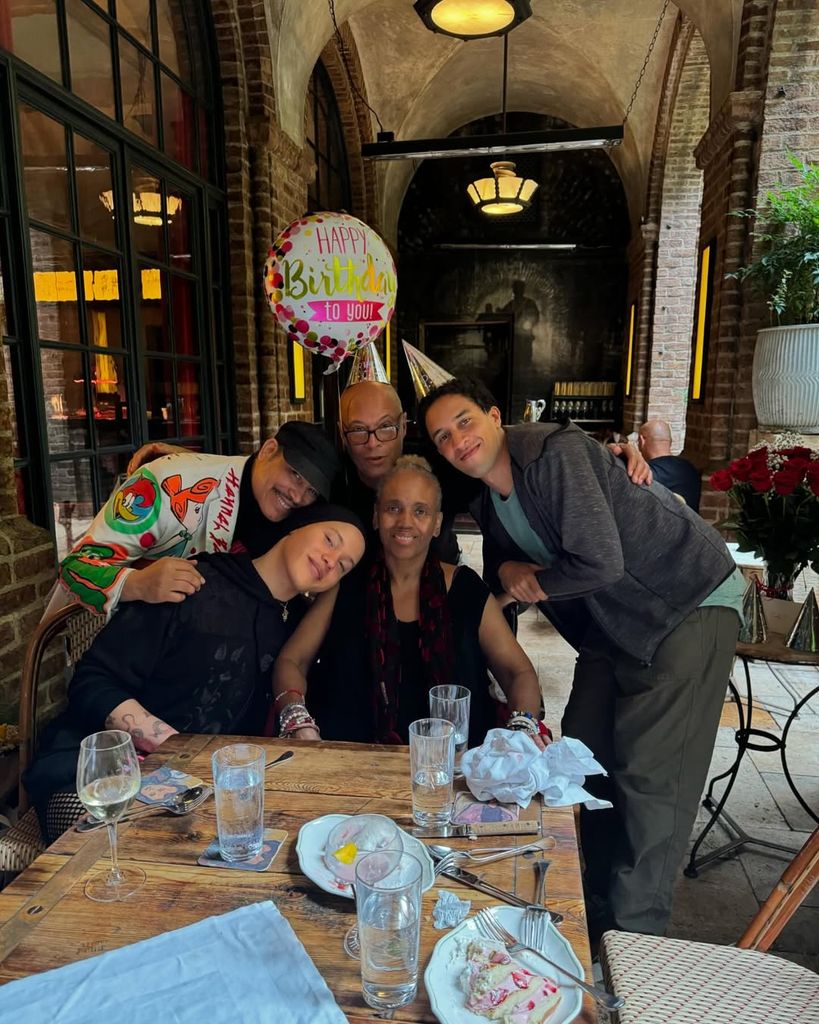
Airyn sat in restaurant celebrating her mom's birthday© Instagram
Airyn celebrating her mom’s birthday

“I would want [success] to happen on my own merit.”

Future

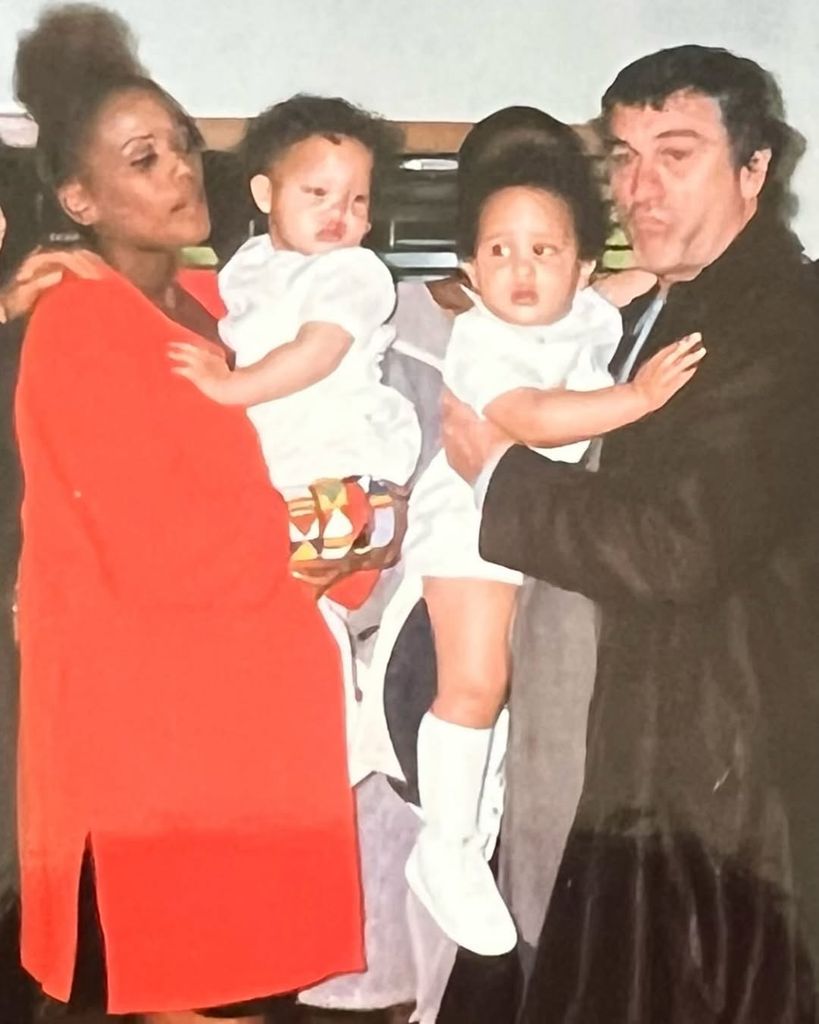
Photo of Robert De Niro holding his twin children© Instagram
Childhood photo

Airyn detailed her hopes for the future and the stars that she looks up to regarding queer advocacy. “I want queer people of color and bigger-bodied people to have an Alex Consani. I want queer people of color and bigger-bodied people to have a Hunter Schafer,” she said.

“A part of me has always wanted to model and sort of follow my mom’s footsteps. Honestly, if I could be on the cover of Vogue with her or recreating one of her pictures, that would be a dream come true.”

Source link

]]>
April Marshall http://transoutloud.com <![CDATA[Who is Airyn De Niro? Robet De Niro’s Daughter Comes Out as Transgender]]> https://transoutloud.org/?p=59285 2025-04-30T14:22:12Z 2025-04-30T14:22:07Z Robert De Niro’s daughter has come out as transgender in her first public interview.

Airyn De Niro, 29, told Them magazine that she begun taking hormone replacement therapy in November last year.

Commenting on her transition, she said: “Trans women being honest and open, especially [in] public spaces like social media and getting to see them in their success… I’m like, you know what? Maybe it’s not too late for me… Maybe I can start.”

Newsweek has contacted Airyn for comment on social media outside of regular working hours.

Airyn De Nero
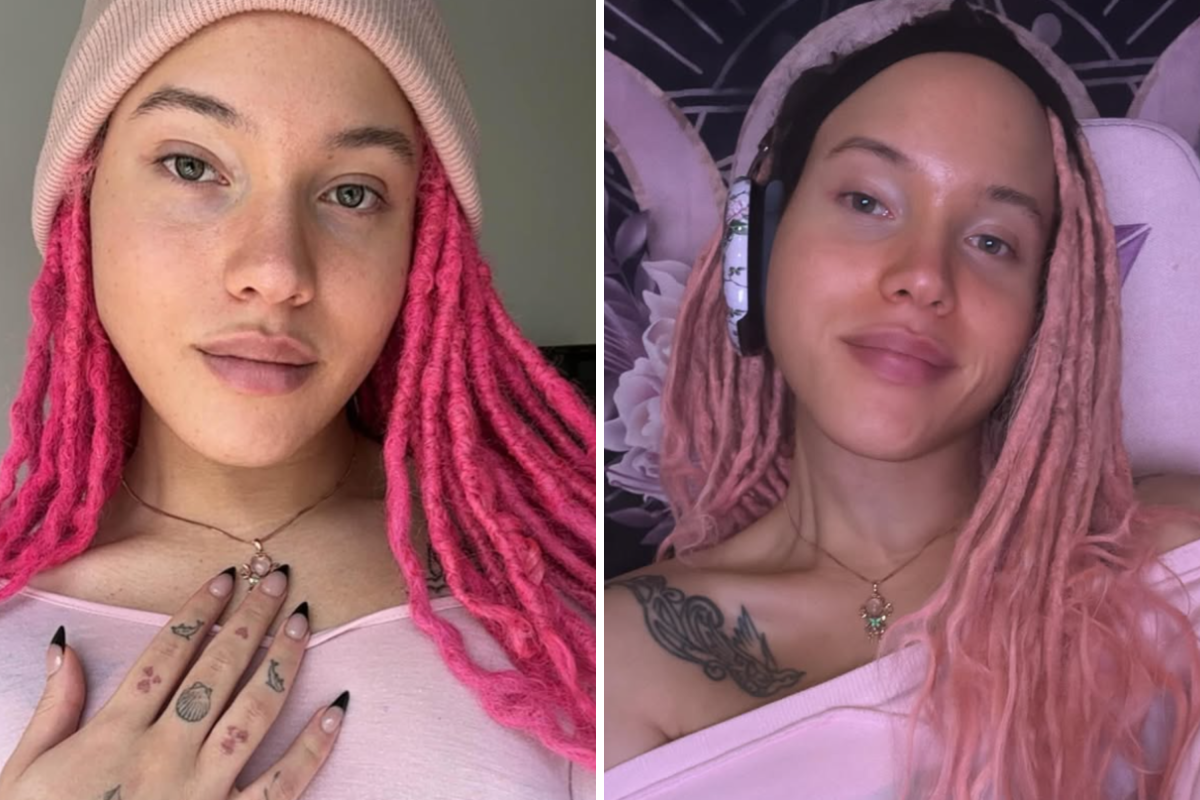
Airyn De Niro has come out as transgender in her first public interview.

voiceofairyn/Instagram

Why It Matters

President Donald Trump has taken multiple steps to unravel protections for transgender people since returning to the White House.

Following his inauguration on January 20, Trump issued an executive order stating that it is “the policy of the United States to recognize two sexes, male and female.” He has targeted gender-affirming care for transgender youths, banned trans people from serving in the military, and excluded trans women from competing in female sports.

What To Know

Speaking about her transition, Airyn told Them magazine: “I was always told I was too much of something or not enough of something growing up: too big, not skinny enough. Not Black enough, not white enough. Too feminine, not masculine enough. It was never just, ‘you’re just right, just the way you are.'”

She added: “I think a big part of [my transition] is also the influence Black women have had on me… I think stepping into this new identity, while also being more proud of my Blackness, makes me feel closer to them in some way.”

Born to Robert De Niro and actress Toukie Smith, Airyn grew up largely out of the spotlight. She said that she hopes to pursue a career in modelling and acting, and has also trained as a mental health counsellor.

“People of color and queer people definitely need more mental health advocacy and support. So I’m hoping I’m able to do that,” she said.

Mental health is a critical issue for Black transgender and nonbinary young people. According to the Trevor Project, as of 2023, one in four Black transgender and nonbinary people had reported a suicide attempt in the previous 12 months.

What People Are Saying

Lexxe, a musician, responded to Airyn’s Instagram post, writing: “You are such a vision I loved reading your words!”

Hannah Joelle Kamphof, a blogger, wrote on Instagram: “Amazing, thank you for showing the world you are with your own voice! Our world needs so much more of this from our diverse community.”

Tomi Lahren, Fox News commentator, wrote on X, formerly Twitter: “Isn’t it amazing that all these deranged celebrities end up having kids who don’t know what gender they are… Feels like child abuse.”

Source link

]]>